|
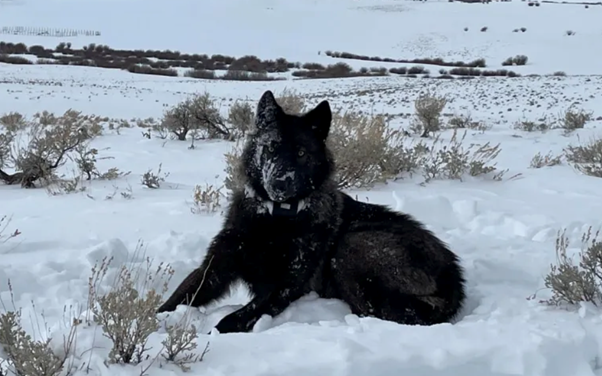
Keep Routt Wild publicly supported two bipartisan Colorado bills concerning gray wolf reintroduction and testified at the House and Senate committees considering them. Both bills were co-sponsored by local Colorado legislators, Representative Meghan Lukens and Senator Dylan Roberts. SB23-255 creates a wolf depredation compensation fund to compensate agricultural producers in the event of depredation of livestock or working animals by wolves. Senate Bill 256, sponsored by Senator’s Will and Roberts as well as Representatives Lukens and Soper, and co-sponsored by every western slope legislator in the state, precludes the Colorado Parks and Wildlife Commission from conducting a reintroduction of wolves until U.S. Fish & Wildlife Service (USFWS) issues a 10(j) rule to the state designating the wolves as a “nonessential experimental population.” The 10(j) rule is a provision of the Endangered Species Act (ESA) which allows for the reintroduction of a federally listed species of wildlife into suitable habitat as an “nonessential experimental population” as opposed to a federally “endangered or threatened species.” The value of a reintroduction under a 10(j) rule is that the rule provides for state management authority of the reintroduced population and gives additional management prescriptions and tools to CPW and landowners to address wolves with a propensity for livestock depredation. Notably this includes the ability to more aggressively haze wolves from livestock herds and, under certain circumstances and with a permit issued by CPW, the possibility of lethal take of wolves with a history of livestock killing. Unfortunately, there is also an alternative option available to the state for reintroduction. That approach would be to release wolves without a 10(j), but rather under a Section 6 Agreement with USFWS. Under this alternative scenario, the reintroduced wolves would be considered “endangered” and the state would concede any and all management authority of the wolves to the federal government. It would also preclude the flexibility available under a 10(j), leaving our state’s agricultural producers and wildlife professionals with virtually no tools or protection from livestock depredation. It would also preclude a management scheme that takes into consideration the state’s investments in all other wildlife species they manage. With the passage of Proposition 114, Colorado voters directed the Colorado Parks and Wildlife Commission to take the steps necessary to begin the reintroduction of wolves by December 31st of 2023. So what happens if, for any reason, USFWS is unable to deliver on the issuance of a 10(j) by that deadline? According to testimony provided by the Department of Natural Resources before the General Assembly, the state would likely move forward with a reintroduction without a 10(j). Senate Bill 256, seeks to provide a safety net to that alternative by providing the state the ability to both introduce wolves in a timely fashion and in a manner that is consistent with the Wolf Restoration and Management Plan that was just approved by the Colorado Parks and Wildlife Commission, which expressly states their preferred alternative is to conduct a reintroduction under a 10(j). Both wolf bills passed with large majorities. The compensation bill is expected to be signed by Governor Polis, but the governor has signaled he may veto the 10(j) bill. We believe the governor should reconsider and sign them both. Governor Polis has a unique opportunity to bridge the urban/rural divide by signing the legislation. It would show that the state of Colorado is committed to the plan as published and that the stakeholder process has real meaning. We thank the bill sponsors for their dedicated efforts on this legislation. We hope that you will join us in our request that Governor Polis sign SB-256, protecting our state’s agricultural producers and ensuring a successful wolf reintroduction. Governor Polis can be emailed at Governorpolis@state.co.us
|